ॐ Namah Shivaya · Sacred essentials for everyday devotion
Chandra Lingam
చంద్ర లింగం
Moon symbolism and a lesser-known shrine
TIRUVANNAMALAI · TAMIL NADU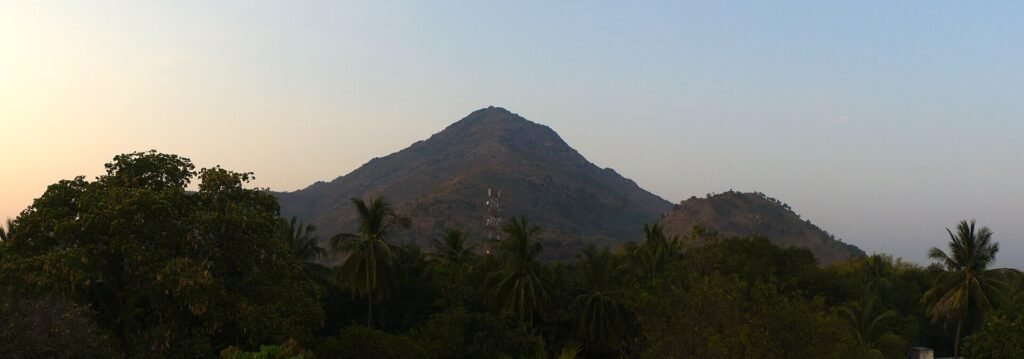
- Location
- Kanji Road, Tiruvannamalai
- Tradition
- Additional Lingam
A shrine beyond the eight directions
Chandra Lingam is associated with the Moon. Its devotional themes include calmness, the mind and remembrance of Shiva. It is one of the additional shrines discussed in the local Dasa Lingam account, alongside Surya Lingam and the eight Ashta Lingams. This classification adds two shrines, not two new compass directions.
The Moon’s changing appearance offers a familiar image for changing moods and the search for steadiness. Such symbolism is part of religious reflection. It should not be presented as a mental-health treatment or an assured result of worship.
The Kanji Road shrine
The supplied research and Arunachala Samudra’s local history place the shrine on Kanji Road. The local account describes reconstruction beginning around 2006 and subsequent reinstallation of the original Lingam. This is a record of recent restoration rather than a securely dated account of the shrine’s first foundation.
Because this stop is outside the standard eight-stop list, allow separate time for it. Confirm the current entrance and approach locally. Avoid assuming that an automatically generated map route is the traditional walking route around Arunachala.
Reading the wider tradition
When comparing a guidebook with signs on the road, remember that transliteration varies between Tamil, Telugu and English. A familiar deity name alone may identify many shrines across India. Pair the name Chandra Lingam with Kanji Road and Tiruvannamalai when seeking directions. The surrounding locality and an attendant’s confirmation are more useful than a generic image or a search result from another town.
Its place in the sacred landscape
Arunachala’s pilgrimage geography includes the hill, the great temple, the eight directional shrines and many additional places of worship. These categories overlap in a devotee’s experience, but they are not interchangeable lists. Learning which kind of place you are visiting makes a route easier to plan and helps preserve the individuality of each shrine.
The Ashta circuit is traditionally followed clockwise, keeping the hill to the right. Interior shrines require time within the temple’s enclosures; additional roadside temples may require a separate approach. Plan these visits as additions to the main walk, rather than assuming that every shrine is immediately beside one continuous pedestrian line.
Worship and a considerate visit
Pause outside the entrance, read any posted instructions and follow the queue. Footwear, offerings, photography and access to the sanctum are governed by the shrine itself. Ask the priest or attendant when unsure. A quiet prayer or remembrance of Shiva is enough for a meaningful visit; this guide does not prescribe a paid ritual or a compulsory purchase.
Keep conversations and phone use low around worshippers. Photograph only where permitted, avoid interrupting puja and never enter a restricted space for a better view. Leave flowers, lamps and other offerings only in the places designated by the temple. The photographs on these pages document an earlier visit and do not establish the present appearance or opening status of a shrine.
Before you visit
Is this one of the eight directional Lingams?
No. This page describes a separate shrine in the wider Girivalam landscape. The eight-direction list remains Indra, Agni, Yama, Niruthi, Varuna, Vayu, Kubera and Esanya.
Can I use the main temple timetable for this visit?
For an interior shrine, the main temple timetable is a starting point, but individual access and puja arrangements can differ. For a roadside temple, confirm its own opening locally. Festival crowd management may change the normal approach.
What should I bring?
Keep water for the journey, sun protection where appropriate, a charged phone and an offline meeting plan. Dress respectfully and follow local footwear and offering instructions. Carry your own essential medicines; avoid treating devotional traditions as a substitute for care.
Does the photograph show this exact shrine?
The eight Ashta pages use individually identified shrine photographs. Other pages show a clearly captioned panorama of Arunachala where a licensed photograph of the specific shrine is not available. The hill photograph is not an interior or façade image of this shrine.
Sources & editorial notes
Prepared by Arunachala Shiva from the supplied research and the references below. Reviewed 1 November 2026. Historical accounts, local traditions and practical visitor information are identified separately. Shrine access and arrangements can change.
The eight directions
Understand the Ashta Lingams and their guardians.
↗02Walk the Girivalam
Shrine finder, preparation and pilgrim checklist.
↗03Temple & history
Read the layers of the sacred landscape.
↗04Legends & festivals
The endless flame and Karthigai Deepam.
↗A sacred corner, in your own home.
Explore the Rudraksha, Shiva Lingams and puja essentials already in our collection. Choose what feels meaningful for your daily practice.
An independent guide by Arunachala Shiva. Not an official temple website. For current access, puja and festival arrangements, follow temple and district announcements.
Back to top ↑ Sacred living.
Every single day.
Thoughtfully chosen essentials, stories and spiritual inspiration for your journey with Shiva.
ॐ नमः शिवाय
Sacred Knowledge photo credits
The eight directional shrine photographs were taken in 2017. The landing page, guides and additional shrine pages use an Arunachala Hill panorama from March 2013; that panorama is not a photograph of each individual shrine.
Indhra Lingam shrine in TiruvannamalaiPhoto: Aravind Sivaraj / Wikimedia Commons · CC BY-SA 4.0. Resized; display crops may apply. Adapted photograph remains CC BY-SA 4.0.
Agni Lingam shrine in TiruvannamalaiPhoto: Aravind Sivaraj / Wikimedia Commons · CC BY-SA 4.0. Resized; display crops may apply. Adapted photograph remains CC BY-SA 4.0.
Yama Lingam shrine in TiruvannamalaiPhoto: Aravind Sivaraj / Wikimedia Commons · CC BY-SA 4.0. Resized; display crops may apply. Adapted photograph remains CC BY-SA 4.0.
Nirudhi Lingam shrine in TiruvannamalaiPhoto: Aravind Sivaraj / Wikimedia Commons · CC BY-SA 4.0. Resized; display crops may apply. Adapted photograph remains CC BY-SA 4.0.
Varuna Lingam shrine in TiruvannamalaiPhoto: Aravind Sivaraj / Wikimedia Commons · CC BY-SA 4.0. Resized; display crops may apply. Adapted photograph remains CC BY-SA 4.0.
Vayu Lingam shrine in TiruvannamalaiPhoto: Aravind Sivaraj / Wikimedia Commons · CC BY-SA 4.0. Resized; display crops may apply. Adapted photograph remains CC BY-SA 4.0.
Kubera Lingam shrine in TiruvannamalaiPhoto: Aravind Sivaraj / Wikimedia Commons · CC BY-SA 4.0. Resized; display crops may apply. Adapted photograph remains CC BY-SA 4.0.
Easanya Lingam shrine in TiruvannamalaiPhoto: Aravind Sivaraj / Wikimedia Commons · CC BY-SA 4.0. Resized; display crops may apply. Adapted photograph remains CC BY-SA 4.0.
Arunachala Hill panorama photographed in March 2013Photo: Lebd / Wikimedia Commons · CC BY-SA 3.0. Resized; display crops may apply. Adapted photograph remains CC BY-SA 3.0.
© 2026 Arunachala Shiva.
Independent devotional brand. Not officially affiliated with or endorsed by any temple or temple administration.
Follow on Instagram ↗